
E-commerce has transformed how people shop. You shop from anywhere and your goods are delivered at your doorstep. But who would have thought it would create the urgent need for items to be delivered on the same day or within hours? Sellers who don’t deliver fast, can tell you this: potential buyers don’t make it to check out. Data shared by Baymard Institute reveals that 21% of consumers abandon their carts if delivery is too slow. Online retailers, especially startups, can’t risk having abandoned carts. So, how are they overcoming this challenge? Establishing micro-fulfillment centers, or MFCs. Micro-fulfillment is slowly becoming part of strategic supply chain management and operates by decentralizing distribution to support efficient last-mile shipping. Instead of depending on large, distant warehouses only, businesses establish a network of smaller MFCs located strategically to bring inventory closer to consumers. This post walks you through how micro-hubs for order fulfillment help small businesses deliver goods on the same day.
Strategic Hub Placement
When a distribution center is located in outskirt areas, serving multiple regions, delivery can’t be quick obviously. It can take 1-3 days or even weeks depending on the distance. To overcome this challenge, small fulfillment hubs are set closer to customers. Often within urban cities or suburban neighborhoods. The proximity to customers, usually within a 5-10-mile radius, shortens the distance between ordered products and the end consumers. Short distances mean delivery vehicles can make more rounds delivering items in less time. This allows for delivery to be done the same day, within two hours, or same hour after placing an order. Ensuring consumers receive their items within 24 hours helps improve customer loyalty. According to Market Data Forecast, deliveries done on the same day boost the competitive edge of a retailer and can make 49% of their customers shop there more. MFCs also reduce the cost of last-mile delivery, saving small businesses significant amounts.
Shared Infrastructure and Flexible Inventory Allocation
Same-day delivery has challenges and one of them is maintaining large centralized warehouses that increase operational expenses. Small businesses who can’t afford stores in every city are at a disadvantage, as they can’t deliver ordered goods fast enough to meet customer demand. But utilizing MFCs lowers infrastructure cost because they act as shared warehousing. Warehouse sharing has become popular in organizations in different sectors. Tech companies and e-learning institutions, for instance, use centralized warehouse services to streamline tech assets management.
With the help of laptop warehousing and retrieval solutions, for example, firms ensure devices are configured, stored securely, and deployed to teams efficiently. Service providers use tracking tech to know the location of devices and ensure inventory is available for the next deployment. Local fulfillment hubs do the same by allowing several sellers to share storage, bringing goods closer to the end users, which reduces turnover time.
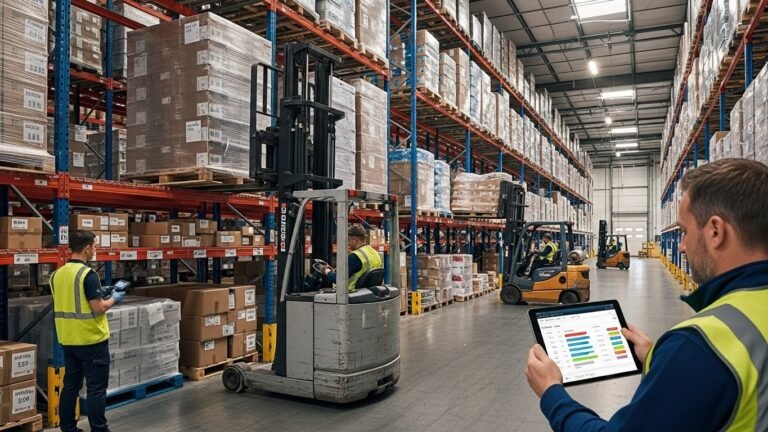
In shared warehouse settings, sellers also share process automation technology and even last-mile delivery networks like couriers and drones. This makes inventory allocation or the shift of stock from online stores to in-store channels or SKUs (stock keeping units) easy. Something else about micro hubs is they use data analytics to make inventory allocation more flexible. Retailers review sales history, geographical buying patterns, seasonal trends, and real-time analytics to determine high demand products. Then store them closer to consumers even before orders are placed to eliminate stockouts, facilitate faster pickups, and guarantee same-day reliability.
Harnesses Automation
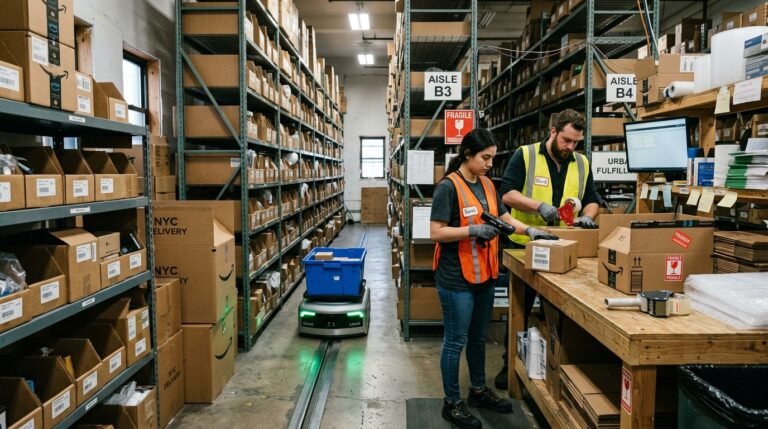
Unlike traditional warehouses, these distribution hubs are compact and fit into limited spaces like the back of a retail shop or unutilized parking areas. On the surface, the small size of less than 10,000 square feet seems like a hindrance to accuracy and efficiency. But it’s not, as micro fulfillment centers often use vertical space and automated tech to optimize storage and order processing. AMRs or autonomous mobile robots and shuttles, for instance, navigate compact spaces effortlessly and can pick shelves or storage bins, reducing walking time, searching for items in warehouses. So, when someone places an order, these systems, often guided by voice command or pick-by-light tech, retrieve the ordered items from storage, pack and deliver them to the pick up station.
Using robotics for order fulfillment, therefore, improves efficiency while reducing labor costs. Inventory is also automated using warehouse management systems. MFC managers or operators use RFID tags and barcode scanning to track stock in real-time to maintain inventory accuracy and 24/7 visibility. This helps businesses determine when to restock, avoiding stockouts and overstocking. When implemented properly, automation facilitates fast order processing. Available stocks means customers don’t have to wait for a retailer to restock. Plus, robotics ensures an order is ready in minutes instead of hours.
Speed equals customer loyalty in the e-commerce sector, where buyers want rapid deliveries if you want them to purchase. Micro fulfillment hubs provide the infrastructure for small businesses to deliver goods on the same day. This adds a competitive edge for small retailers. So, how do MFCs make same-day deliveries possible? Bring inventory where buyers and reduce warehousing costs for store owners while providing flexible inventory distribution. Through automation, especially robotics and optimized inventory, micro hubs make order processing and fulfillment fast.