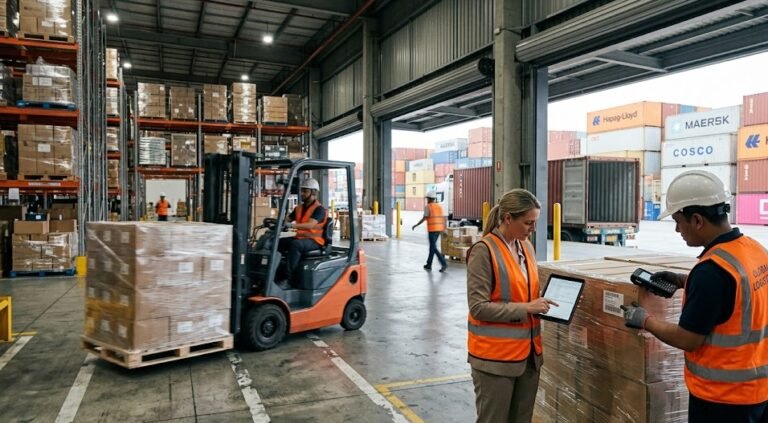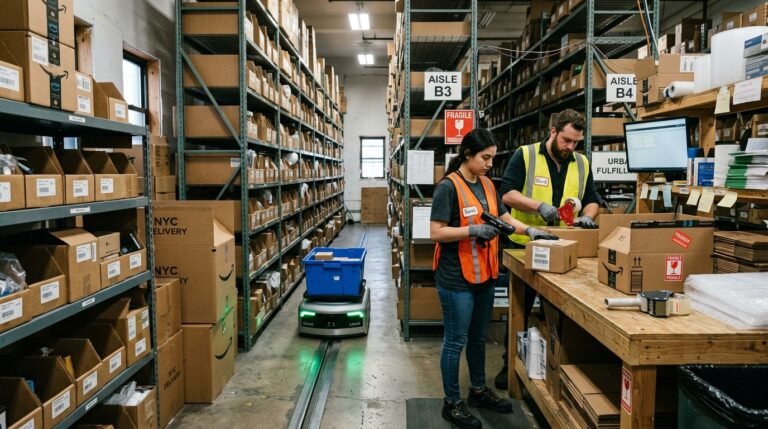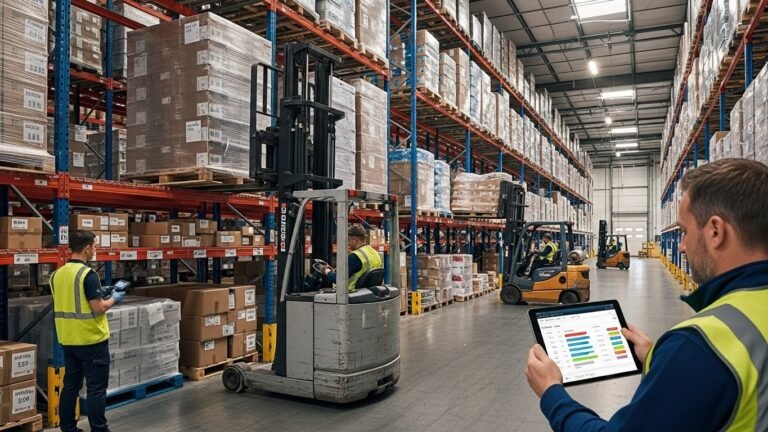

Artificial Intelligence (AI) is transforming supply chains by improving visibility, speed, accuracy, and resilience across end-to-end operations. AI, including Machine Learning (ML) and computer vision, is being integrated into every stage of the supply chain to drive efficiency, reduce costs, and build resilience. The primary function of AI is to analyze massive volumes of real-time and historical data to identify patterns and generate optimal decisions faster than humans can.
| Supply Chain Function | AI Application and Use Case | Key Benefits |
| Demand Forecasting & Planning | AI analyzes internal data (sales, marketing leads) and external factors (social media sentiment, competitor pricing, weather, macroeconomic trends) to create highly accurate demand predictions. | Reduces forecast errors by 30-50%, minimizes stockouts and overstocking, and lowers inventory carrying costs. |
| Inventory Management | AI-powered systems monitor inventory levels in real-time using sensors, drones, and computer vision. They determine optimal safety stock and reorder points. | Optimizes inventory levels (up to 35% improvement), speeds up fulfillment, and reduces waste. |
| Logistics & Route Optimization | AI algorithms analyze traffic, weather, road conditions, and delivery constraints to dynamically calculate the fastest, most fuel-efficient delivery routes. | Reduces logistics costs (up to 15%), lowers fuel consumption, and improves on-time delivery performance. |
| Warehouse Operations | AI-driven systems optimize warehouse layouts and racking designs. Robots and autonomous guided vehicles (AGVs) use AI for sorting, packing, and moving goods. | Improves warehouse efficiency, automates routine and repetitive physical tasks, and reduces labor costs. |
| Risk & Resilience Management | AI continuously monitors global events (geopolitical instability, natural disasters) and supplier performance to predict disruptions. It can also perform root cause analysis for failures. | Allows for proactive contingency planning, strengthens supply chain resilience, and helps companies swiftly develop crisis response strategies. |
| Sourcing & Procurement | AI assists in screening Requests for Quotation (RFQs), automates routine communication with suppliers, and assesses supplier risk based on performance, financial stability, and compliance data. | Streamlines procurement processes and enhances the strategic focus of category managers. |
Demand Forecasting & Planning
- AI analyzes historical sales, seasonality, promotions, weather, and market signals.
- Produces more accurate demand forecasts than traditional statistical models.
- Enables dynamic demand sensing and real-time plan adjustments.
Impact: Reduced stockouts, lower excess inventory, improved service levels.
Inventory Management
- Optimizes safety stock levels across multiple locations.
- Identifies slow-moving and obsolete inventory.
- Supports multi-echelon inventory optimization.
Impact: Lower carrying costs and improved working capital.
Procurement & Supplier Management
- Predicts supplier risks (delays, financial distress, geopolitical issues).
- Automates supplier selection and contract analysis.
- Monitors supplier performance using AI-driven scorecards.
Impact: Stronger supplier relationships and reduced supply risk.
Logistics & Transportation
- AI optimizes routing, load planning, and carrier selection.
- Predicts delivery delays and recommends alternatives.
- Supports autonomous vehicles, drones, and smart warehouses.
Impact: Reduced transportation costs and faster deliveries.
Manufacturing & Operations
- Predictive maintenance using sensor and IoT data.
- AI-driven production scheduling.
- Quality inspection using computer vision.
Impact: Less downtime, higher throughput, better quality.
Risk Management & Resilience
- Identifies disruptions early (natural disasters, strikes, pandemics).
- Simulates “what-if” scenarios.
- Recommends mitigation actions in real time.
Impact: More resilient and agile supply chains.
What Supply Chain Professionals Must Do to Stay Successful
AI will augment, not replace, skilled supply chain professionals. To remain relevant and successful. As AI automates transactional and repetitive tasks, the supply chain professional’s role is shifting from an executor to a strategist, analyst, and leader. To thrive in this new landscape, you must focus on cultivating a specific set of “T-shaped” skills: deep domain knowledge combined with broad data and human capabilities.
| Shift From | Shift To |
| Tactical Execution (Placing orders, running standard reports) | Strategic Leadership (Designing networks, mitigating global risk) |
| System Operator (Expert in one ERP/WMS) | AI/Data Translator (Expert in interpreting and applying AI insights) |
| Data Collector (Doing manual data analysis) | Relationship Builder (Negotiating, collaborating, and managing stakeholders) |
| Routine Task Manager | Creative Problem-Solver (Tackling complex, novel challenges) |
Develop Data & AI Literacy
This is the new baseline competency. It is no longer enough to be proficient in a traditional enterprise system (like a specific ERP). Success now depends on your ability to work with AI tools.
- Learn to Interpret AI Output: Understand how AI models arrive at a decision. You must have the critical thinking to know when to trust an AI-generated demand forecast or route, and when to challenge it due to potential bias or flawed input data.
- Master Prompt Engineering: As AI systems take over tasks like generating reports, drafting supplier contracts, or performing market research, the value shifts to crafting precise and effective inputs (prompts) to get the best results.
- Upskill in Analytics: Focus on moving beyond basic data manipulation (like VLOOKUPs and pivot tables) to understanding and applying concepts like predictive modeling, data visualization, and statistical analysis.
- Understand how AI models work (not coding, but concepts).
- Learn to interpret AI outputs and question results.
- Be comfortable with dashboards, analytics, and digital tools.
Key skills: Data interpretation, critical thinking, scenario analysis.
Strengthen Business & Strategic Skills
- Focus on decision-making, not just execution.
- Translate AI insights into business actions.
- Align supply chain decisions with company strategy and financial goals.
AI gives answers; humans decide what to do with them.
Embrace Cross-Functional Collaboration
- Work closely with IT, data science, finance, sales, and marketing.
- Act as the bridge between technical teams and business users.
Future leaders = translators between technology and operations.
Focus on Problem-Solving & Judgment
- Handle exceptions, trade-offs, and ethical considerations.
- Manage uncertainty, negotiations, and human relationships.
AI struggles with nuance; humans excel at it.
Commit to Continuous Learning
- Learn emerging tools: digital twins, AI planning systems, automation.
- Pursue certifications (e.g., APICS/ASCM, data analytics, AI for business).
- Stay informed about global risks and sustainability trends.
Develop Leadership & Change Management Skills
- Lead AI adoption and digital transformation.
- Manage resistance to change.
- Coach teams to work effectively with AI tools.
Elevate Strategic and Critical Thinking
AI will handle the “how” and “when”; professionals must own the “why” and the strategy.
- Focus on Business Strategy: Shift from daily execution (e.g., placing an order) to high-value work like designing a global supply network, developing strategic sourcing policies, or assessing the total cost of ownership for a major investment.
- Embrace Scenario Modeling: Use AI tools to run sophisticated simulations—such as how a tariff change or a new competitor would impact your supply chain—and translate those findings into actionable business strategy.
- Lead Change Management: Since AI adoption requires new processes and team structures, the ability to lead organizational change, communicate the value of new technology, and guide teams through transition becomes essential.
Develop Essential Human Skills (Soft Skills)
The tasks that AI cannot replicate are those that require human judgment, empathy, and complex relationship building.
- Negotiation and Supplier Relationship Management (SRM): AI can provide risk scores and market intelligence, but human-to-human negotiation, conflict resolution, and developing long-term strategic partnerships with key suppliers remain purely human domain.
- Cross-Functional Collaboration: As supply chains become more interconnected, you must be able to work seamlessly with finance, sales, product development, and IT to align supply chain goals with overall business objectives.
- Ethical and Sustainable Judgment: Professionals will be responsible for ensuring that AI-driven decisions adhere to corporate sustainability goals and ethical sourcing standards, a critical area of corporate accountability.
Conclusion
AI will automate tasks, but not accountability.
Supply chain professionals who succeed will be those who:
- Understand AI
- Trust but verify its outputs
- Use judgment, creativity, and leadership
- Focus on strategy, resilience, and value creation
The rise of Artificial Intelligence (AI) is fundamentally transforming supply chain operations, shifting the focus from manual, reactive tasks to automated, predictive, and strategic management. For professionals, this transition necessitates a new blend of technical literacy, strategic thinking, and essential human skills.

Danish Mairaj is a medical device expert with a strong focus on regulatory and quality compliance. He has been involved in managing clinical trial infrastructure including supplies and logistics. He has over 15 years of experience in the MedTech and Pharmaceutical industry. He is a certified Product Owner, Scrum Master, and Project Management Professional PMP. He studied Biomedical Engineering in Germany and MedTech Regulatory & Quality in Galway, Ireland. He contributes articles to the BRASI newsletter.
- Danish Mairaj#molongui-disabled-link
- Danish Mairaj#molongui-disabled-link

- Danish Mairaj#molongui-disabled-link
- Danish Mairaj#molongui-disabled-link